
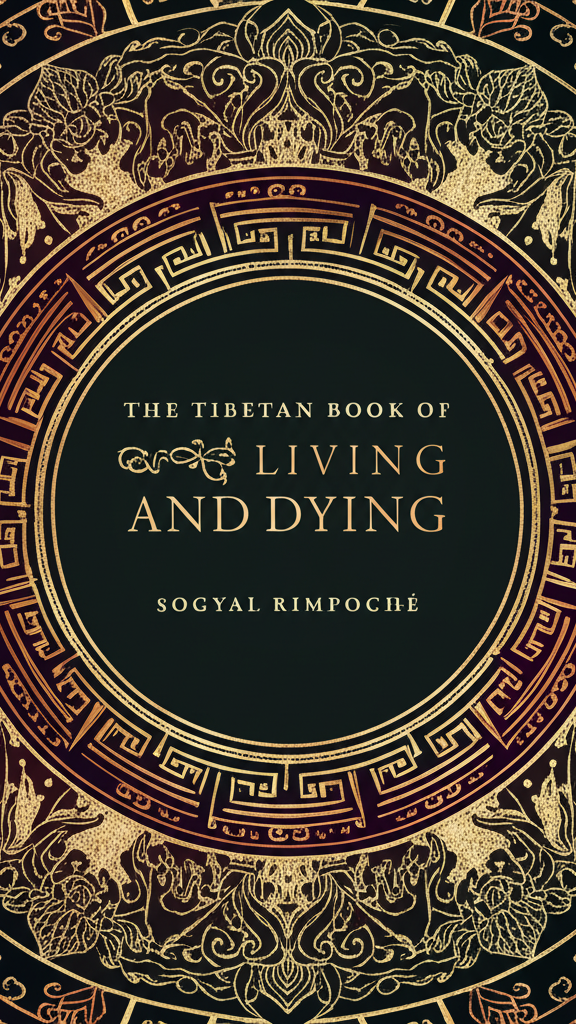
Navigating the Crossroads of Existence
Most of us live with a quiet, lingering fear of death. We often push this thought away, waiting for a major life crisis like a serious illness or the loss of someone we love to make us think about our own lives. However, Buddhist teachings encourage a different approach. Instead of waiting for a wake-up call, we can use our time now to prepare for what's to come. This isn't about being gloomy; it's about living with purpose and seeing death not as a final stop, but as a transition into a new phase of existence.
Death is not the end, but a transition to something greater. [1]
This idea of transition is captured in the Tibetan concept of "bardo." A bardo is essentially an in-between state, the gap between one phase and the next. While it most famously refers to the state between death and rebirth, bardos are happening all around us. Think about the major shifts in your own life: changing schools, moving to a new city, or even just evolving your personal style. These are all mini-bardos. Recognizing these moments is powerful because they are like standing at a crossroads. The choices you make in these transitional spaces can have a huge impact on the direction your life takes.
In Tibetan Buddhism, our entire existence is seen as a cycle of four interconnected phases: life, the process of dying, the experience after death, and the journey to rebirth. Each of these has its own corresponding bardo. There's the "natural" bardo of our current life, the "painful" bardo of dying, the "luminous" bardo of what comes after, and the "karmic" bardo that leads to our next life. By understanding this framework, we can start to see death not as a terrifying defeat, but as a moment of profound potential and liberation.
There is a saying in Tibetan, 'Tragedy should be utilized as a source of strength.' [14]
The Four Chapters of Existence
Our journey through life and beyond isn't just one continuous stream; ancient wisdom traditions describe it as a series of four distinct phases, or 'bardos.' These are like different chapters in the grand story of our existence, each with its own unique characteristics and lessons. Understanding these stages — life, dying, the state after death, and the path to rebirth — can offer a deeper perspective on our entire spiritual journey.
The first chapter is the 'natural' bardo of this life, which spans from the moment we are born until our final breath. While it might feel like a long time, this period is actually quite brief when compared to the vastness of the other stages. It's considered the most valuable time to prepare for what comes next, by truly understanding spiritual teachings and consistently practicing them. Think of it as your training ground for everything that lies ahead.
Life is a preparation for the future; and the best preparation for the future is to live as if there were none.
Next, we enter the 'painful' bardo of dying. This phase begins as the process of our physical body shutting down starts, and it continues until our very last 'inner breath.' This isn't just a simple exhale; it signifies the complete conclusion of our current life cycle, a profound and often challenging transition as we let go of our physical form.
Following this is the 'luminous' bardo of dharmata. This is described as a moment of incredible liberation and clarity, where the mind becomes exceptionally pure and free from suffering. It's a direct encounter with the true, fundamental nature of reality itself – a deeply spiritual peak. During this powerful experience, it's said that one might perceive vibrant sounds, brilliant colors, and intense light, revealing the essence of existence.
Finally, there's the 'karmic' bardo of becoming. In this stage, having shed the physical body, a person experiences visions and encounters that are a direct reflection of their accumulated karma. This means seeing the results of all the actions, thoughts, and decisions made during their previous life. It's a critical moment of reckoning and understanding, occurring just before the soul is guided towards its next reincarnation.
Embracing the Present: Unveiling Our True Self
Life holds many profound mysteries, and among the greatest is death itself. While its exact nature remains elusive, two truths stand clear: every single one of us will eventually die, and yet, the precise moment or manner of our departure is completely unpredictable. There's no hiding place on Earth where this ultimate certainty won't eventually find us.
Often, the thought of our final moments fills us with apprehension, a feeling of stepping into the great unknown. This fear, however, frequently stems from a deeper unawareness of who we truly are. We tend to build our sense of self around external things – our name, our life story, the people we know, and the possessions we gather.
The quieter you become, the more you can hear.
But what happens when all these external markers fade away? Who are we then? The truth is, there's an essential part of us that has always been present, an inner self we often overlook or actively avoid. We frequently fill our days with endless tasks and constant noise, creating distractions that prevent us from confronting the quiet space within, where this true identity resides.
Instead of constantly seeking external validation or accumulating countless unnecessary things, a path of simplicity can lead to greater peace. Many people unconsciously fill their lives with distractions to avoid facing their own inner emptiness. Remembering that life is fragile and can change in an instant encourages us to focus on what truly matters.
Yesterday is history, tomorrow is a mystery, but today is a gift. That is why it is called the present.
The only moment we genuinely possess is right now. The past is already gone, and the future is yet to arrive. Therefore, it's crucial to live each day with intention and meaning, rather than letting ourselves get lost in repetitive, unexamined routines.
Embracing Life's Full Journey
While it might sound straightforward to accept the idea of death, truly coming to terms with it can be incredibly challenging. However, preparing ourselves mentally and spiritually is a vital step. This kind of inner training can help us navigate life's natural progression, making the journey smoother and allowing us to move forward with a sense of peace.
Consider the remarkable story of Johanna, a woman from North America. Despite having no particular interest in Buddhism, she was desperately ill and, in her search for any possible solution, decided to visit the renowned Tibetan master Dudjom Rimpoché. She was given only months to live by her doctors and, overwhelmed with fear, tearfully confessed to the master, 'I'm dying!'
With a kind smile, the master offered a profound truth: 'We are all dying. It's just a matter of time.' He then spent time explaining a hopeful perspective on death, providing her with a powerful lesson in healing. Johanna embraced his teachings wholeheartedly. Astonishingly, by truly accepting her mortality and following his guidance, she not only found deep inner peace but also experienced a complete recovery from her illness.
This isn't an isolated event. Many individuals diagnosed with severe, life-threatening conditions have found unexpected healing. When they choose to step away from daily distractions, engage in spiritual practices, and deeply confront their inner selves, they often discover a path to recovery. This powerful connection suggests that embracing the reality of death can profoundly shift our outlook on life and significantly improve our overall well-being.
It's undeniably a difficult process. We often cling tightly to our familiar routines and comfortable habits, which can make it incredibly hard to let go and accept such a fundamental truth about existence. However, the effort to confront this reality is truly worthwhile, opening doors to deeper understanding and resilience.
The only way to make sense out of change is to plunge into it, move with it, and join the dance. - Alan Watts
Learning to live is learning to unlearn.
The Open Hand: Finding Freedom in Letting Go
Imagine something you truly value – maybe a close friendship, a big dream, or even a cherished possession. Now, picture holding it tightly in your closed fist. If you grip it with all your might, you might be driven by a fear of losing it. Your instinct might be to hold on even tighter, believing that this intense grip is the only way to keep it safe. But what if there was another, more peaceful way to hold onto what's important without that constant worry?
Consider a simple experiment: take a coin and pretend it represents that precious thing. Close your hand around it, palm down. Now, without letting go, slowly turn your hand so your palm faces up. As you gently open your fingers, the coin remains in your open palm. It's still yours, safe and secure, but now it's surrounded by space, not trapped by a desperate grip. You've stopped clinging, yet you haven't lost it.
This simple act holds a powerful lesson for life. We often don't fully appreciate how much something or someone means to us until we face the possibility of it changing or leaving. In those moments, our attachment can grow stronger, making us want to cling even more. However, the harder we try to hold on, the more strained and distant things can become, much like trying to squeeze water through your fingers – the more you grasp, the more slips away.
You can only lose what you cling to.
The key to overcoming this struggle isn't to stop caring, but to recognize that everything in life is constantly changing. By giving things space, like the coin in your open hand, we acknowledge their nature without fear. This doesn't mean we don't love or value them; it means we trust that even with room to breathe, their essence and importance remain. We stop clinging, and we stop constantly worrying that they're about to disappear.
Many wise teachers suggest adopting a calm, detached attitude, much like the vast sky watching the clouds drift by. The sky doesn't try to hold onto the clouds, whether they are bright and fluffy or dark and stormy; it simply allows them to pass. By accepting change and embracing this open approach, we can live with greater freedom, peace, and serenity, allowing life to unfold naturally without the constant struggle of trying to control what cannot be controlled.
Unlocking Your Inner Buddha
Life, with all its ups and downs, exists primarily within our minds. Our minds are the foundation of everything we experience, shaping both our joy and our pain. The part of our mind that's constantly thinking, planning, wanting, and trying to control things is what we often call "Sem." This "Sem" mind is the source of negative feelings that cloud our experiences and hold us back.
But there's another possibility within us: the "Buddha" mind. A "Buddha" isn't some distant figure, but anyone who has woken up completely from the fog of ignorance and unlocked their full potential for wisdom and compassion. A Buddha is someone who has overcome suffering and discovered a lasting peace and happiness that never fades. To move beyond the limitations of our ordinary "Sem" mind and tap into our inner "Buddha," we need to look inward.
The journey begins with meditation. Through regular meditation, we gradually cleanse our ordinary mind, uncovering its ingrained patterns and illusions. This process allows us to recognize our true nature at the perfect moment. This is the path to enlightenment, a path that requires inner work and self-discovery. As the saying goes, 'The mind is everything. What you think you become.'
Ultimately, facing death without fear and with unwavering confidence requires a deep understanding of our mind's true nature. Without this understanding, we remain trapped in the cycle of fear and uncertainty.
Finding Your Inner Sanctuary
Meditation is like giving your mind a much-needed vacation from its usual hustle and bustle. It's about stepping away from all the worries and distractions that fill our daily lives and finding a place of peace within ourselves. The core of this practice can be boiled down to three simple yet powerful actions: bringing your mind back to its natural home, learning to release your grip, and simply allowing yourself to relax.
Bringing your mind home means gently guiding your attention inward, settling into the true nature of your awareness, often called 'Rigpa.' This is the space where you can truly be yourself, unburdened. Letting go is about recognizing that our struggles, our fears, and our anxieties often stem from our tendency to cling to things – thoughts, feelings, or situations. When we learn to loosen this grip, we free ourselves from the mental prison we can create.
Relaxing in meditation means cultivating a sense of spaciousness and ease, releasing all the built-up tension in your mind. To start, find a comfortable posture – loose clothing, a relaxed body. Try to step out of your usual anxious state. Think of your thoughts like a block of ice melting under the sun; if you feel rigid or overwhelmed, allow that intensity to soften and dissolve.
Imagine yourself as a mountain, standing tall and calm no matter what storms or clouds may pass by. Keep your back straight, like an arrow ready to fly, symbolizing a grounded yet poised presence. Crossing your legs can represent the balance of different aspects of life, bringing them together.
It's often helpful to keep your eyes slightly open, with a soft, panoramic gaze, as this can prevent you from drifting off. If you find this too distracting, begin with your eyes closed and gradually open them as you become more settled. The duration isn't as important as the quality of your attention. Even five minutes of focused, present meditation is far more valuable than twenty minutes spent dozing!
The mind is everything. What you think you become.
Be still, and know that I am God.
Finding Your Inner Calm: Simple Meditation for Today
While there are tons of ways to meditate, three simple yet powerful methods stand out for us living in today's busy world. These techniques can help you find a sense of peace and clarity, no matter what's going on around you.
One incredibly effective way is to simply pay attention to your breath. Just breathe normally and gently focus on the exhale. As you let the air out, imagine releasing all the stuff weighing you down – your worries about relationships, school, or anything else. Then, just be still in that quiet moment between breaths, letting your mind relax in the vastness of that space.
Another approach is to gently rest your mind on a chosen object. This could be something beautiful like a flower, a sparkling crystal, or even an image of someone you deeply admire, like Buddha, Christ, or a spiritual teacher. This practice helps you connect with your inner wisdom and truth, especially by fostering a personal connection with what you hold sacred.
Finally, when you're feeling stressed or a bit shaky emotionally, chanting a mantra can be a game-changer. A mantra is like a sacred sound, packed with spiritual energy. As you repeat it, your breath and your whole being become infused with the mantra's power, helping to cleanse your mind and inner self.
The mind is everything. What you think you become.
In the stillness of meditation, we find the strength to navigate the storms of life.
The Echo of Every Action
Think about this: every single thing you do, no matter how small it seems, has a ripple effect. It's like dropping a tiny pebble in a lake – the ripples spread out far and wide. Masters have taught us that even a little bit of poison can be deadly, and a tiny seed can grow into an enormous tree. So, never dismiss the power of small good deeds; just like drops of water eventually fill a bucket, consistent positive actions build up.
The effects of your actions, known as karma, don't just disappear over time. They can't be erased by fire or water. Their energy remains potent, waiting for the right moment to unfold. You might not see the results of something you did right away, and you might even forget you did it. When something happens to you, it's easy to think it's just random luck or chance, but it's actually the ripening of your past karma.
Consider the incredible diversity among people. If karma isn't the reason, what else could explain why we're all so different? Even if we share the same birthplace or family, each of us has a unique personality, experiences different fortunes, and possesses distinct talents and destinies. This individuality is a testament to the accumulated karma from countless past actions.
For those who truly understand and work with karma, there's a profound possibility: they can choose to return to this world, life after life, with the specific intention of helping others. Sometimes, a spiritual teacher might even leave clear directions about where and when they will be reborn. Other times, a devoted student might receive a spiritual insight or vision that reveals their teacher's next incarnation.
The future belongs to those who believe in the beauty of their dreams. – Eleanor Roosevelt
The Art of Listening with Your Heart
When someone is facing the end of their life, the most powerful thing you can offer is your genuine, fear-free presence. If they choose to share their deepest feelings, resist the urge to jump in, interrupt, or dismiss what they're saying. Remember, they're in a really sensitive spot, and they need your full compassion and understanding to feel safe enough to open up.
The best way to support them is often by simply being there, quietly and attentively. Create a calm space where they feel truly heard. Sometimes, a touch of everyday wisdom or even a lighthearted moment can help ease the tension surrounding difficult conversations about life and death.
Don't put pressure on yourself to have all the answers or to fix everything with your words. The goal isn't to achieve some grand outcome, but to accept the person exactly as they are, without any conditions. Your unwavering love and authentic presence speak volumes, far more than any advice you might offer.
It's also incredibly helpful to acknowledge and process your own feelings about death. When you understand your own fears, you can connect more deeply with the fears of the person you're supporting, paving the way for truly honest and equal communication.
Gently remind them of their strengths and the good they've brought into the world, and give them the space to express whatever comes up for them, listening with your full attention and empathy.
The greatest gift you can give someone is your presence. When you are fully present with them, they can find their own way.
Many people on their deathbeds share a common, heartfelt desire: 'I just wish someone would truly try to understand me.' So, even with the best intentions, avoid denying their reality, pushing relentless positivity, or expecting miracles. Simply showing that you care and are willing to listen is often enough to make them feel deeply loved and understood.
Letting Go: Preparing for the Final Journey
As you approach the end of life, it's incredibly helpful to start untangling yourself from worldly attachments. This means sorting out who gets your belongings before you pass. By doing this, you free yourself from the worry of your possessions and even from your loved ones, preventing potential squabbles later on. Remember, you can't take any of your earthly treasures with you.
Creating a calm and peaceful environment for your final moments is key. It can be disruptive to have grieving family members around, as their strong emotions might interfere with your transition and the natural unfolding of your karma. It's often easier to make this journey alone, which can be hard for families to understand, but it helps with detachment.
After physical death, during what's known as the luminous bardo, your consciousness becomes incredibly clear. You might be able to perceive your loved ones, sense their thoughts, and hear their words. This heightened awareness can be a profound experience, for better or worse. It's therefore advised to maintain a mindful and respectful demeanor after someone has passed. If the focus is solely on disputes over inheritance, it can stir up intense emotions that might lead to a less fortunate rebirth.
The greatest glory in living lies not in never falling, but in rising every time we fall.
It is not the load that breaks you down, it is the way you carry it.
Beyond the Body: Embracing the Continuum of Consciousness
Imagine this: the body you see in the mirror, the one you feel so solid and real, is actually just a temporary outfit. When you truly grasp that your consciousness is the real you, and it keeps going even after your physical form is gone – through what are called 'bardos' – then the fear of death starts to fade away. We get so attached to our bodies, mistaking them for our entire identity, but at the moment of death, that illusion dissolves.
It's a bit disheartening to see how much we invest in conflict and destruction, while very little goes into understanding life and death, or supporting those who are passing. This neglect highlights our own lack of awareness and compassion, both for ourselves and for others. Learning about death and how to offer comfort should be a fundamental part of everyone's education, from schools to universities, and especially crucial for healthcare professionals in hospitals.
Shifting our focus towards inner growth and spiritual development is incredibly important. Each of us has the potential for profound wisdom and peace, and everyone deserves to experience life and face death with serenity. In today's fast-paced world, integrating spirituality into our daily lives isn't just for monks or nuns; it's a serious pursuit for everyone. Like mastering any skill, it requires consistent effort and commitment.
The greatest discovery of all time is that a person can change his future by merely changing his attitude.
As we journey through life, we accumulate experiences, but sometimes without truly organizing them, which can lead to a dulling of our natural sense of wonder. This is why embracing a spiritual perspective can reawaken that childlike curiosity and help us see the world with fresh eyes.